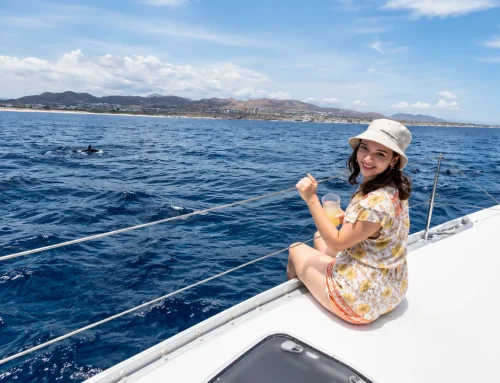
Humpback whales in Cabo San Lucas are the main event of every winter. From mid December to mid April, thousands of these giants, each one about the weight of a loaded school bus, arrive from the cold waters of the North Pacific to mate, give birth and teach their calves to swim. Many of them do it just minutes from the marina.
If you are planning a trip for the 2026 to 2027 season, this guide explains why humpbacks come here, what they do at the surface, how to tell them apart from the gray whales that also pass by, and how to watch them from your own private catamaran.
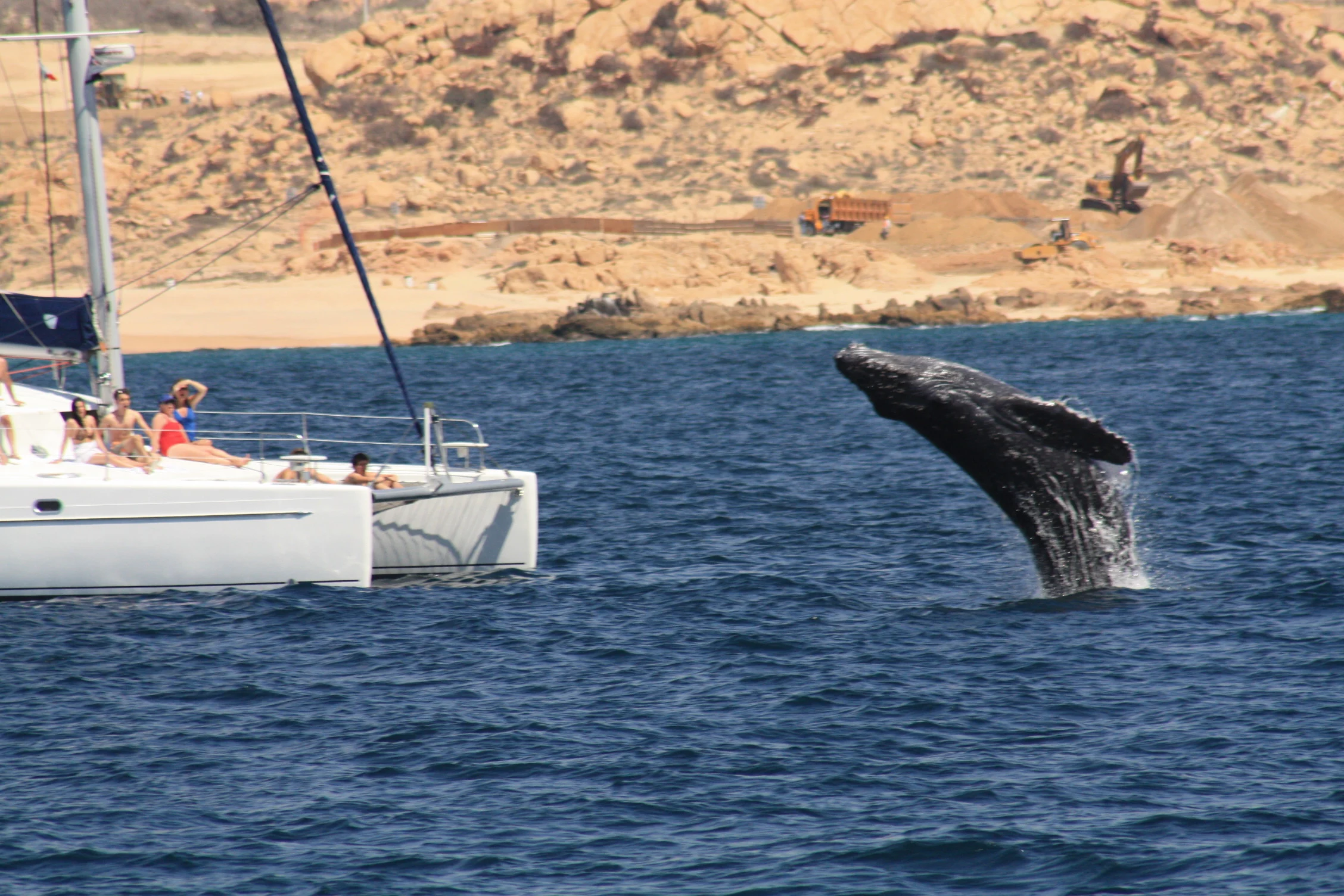
Why Humpback Whales Come to Cabo San Lucas
Humpbacks spend the summer feeding in rich, cold waters off Alaska, Canada and the northern Pacific. When autumn arrives they stop eating and swim thousands of miles south to the warm, calm waters of Baja California Sur. For many of them, the trip is one of the longest migrations of any mammal on the planet.
Cabo San Lucas sits right where the Pacific Ocean meets the Sea of Cortez. Deep water runs close to shore, which gives the whales space to court, breed and rest without heading far out to sea. That is why a good whale watching trip here rarely needs a long ride: the action often starts soon after you pass El Arco.
Mothers arrive with newborn calves that drink rich milk and gain weight quickly before the long swim north in spring. Males compete for the attention of females, and that competition explains much of the splashing you will see from the deck.
What Humpback Whales Do in Cabo Waters
Every encounter is different, but these are the behaviors guests ask about most:
- Breaching. The whale launches most of its body out of the water and lands with a huge splash. It is the photo everyone hopes for, and it happens often in peak months.
- Tail slaps and fluke dives. A humpback lifts its tail before a deep dive, showing a black and white pattern under the fluke that is unique to each whale, like a fingerprint.
- Pectoral fin slaps. Humpbacks have the longest pectoral fins of any whale, close to a third of their body length, and they slap them on the surface again and again.
- Spy hopping. The whale rises vertically with its head out of the water, apparently taking a look around.
- Competitive groups. Several males chase one female at high speed, pushing and splashing. It is intense, loud and unforgettable.
- Singing. Male humpbacks sing long, complex songs during the breeding season. You will not always hear them from the boat, but it is good to know the ocean under you is full of music.
Humpback or Gray Whale? How to Tell Them Apart
Humpback whales are dark on top with white patches on their long pectoral fins and under the tail. They have a small dorsal fin sitting on a hump, which gives them their name, and they are the acrobats of the group. If you see a whale jumping, it is almost always a humpback.
Gray whales look mottled gray and white, covered in barnacles and light scars. They have no real dorsal fin, only a row of small bumps along the lower back. Most gray whales head to the protected lagoons on the Pacific side of Baja to give birth, so around Cabo you usually see them while they travel, mostly between January and March. Their surface behavior is calmer: a heart shaped spout, a slow roll and a dive.
Every season also brings a few surprises. Blue whales, sperm whales and even orcas are seen from time to time in these waters, although nobody can promise them.
Best Months to See Humpback Whales in Cabo San Lucas
The official whale watching season in Los Cabos runs from December 15 to April 15. Inside that window, this is what to expect:
- December: the first humpbacks arrive and numbers grow every week.
- Late January to March: peak season, with the most whales, the most breaching and the best odds of seeing mothers with calves.
- Early April: fewer whales, but the calves are bigger and more playful before they head north.
For a closer look at each month, read our month by month guide to whale season.
Why Watch Whales From a Private Catamaran
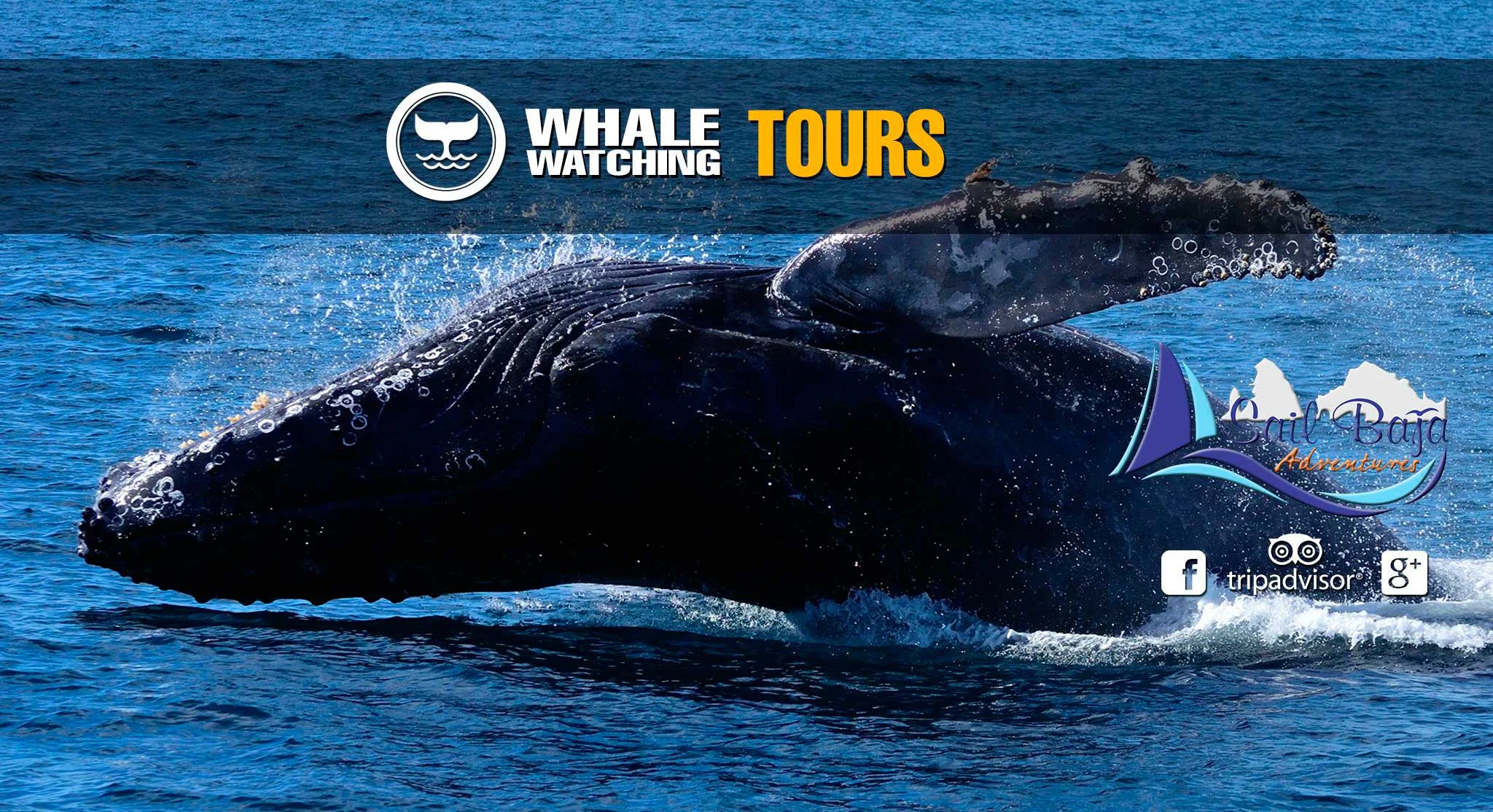
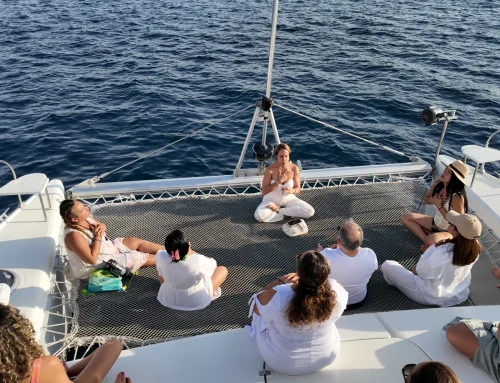
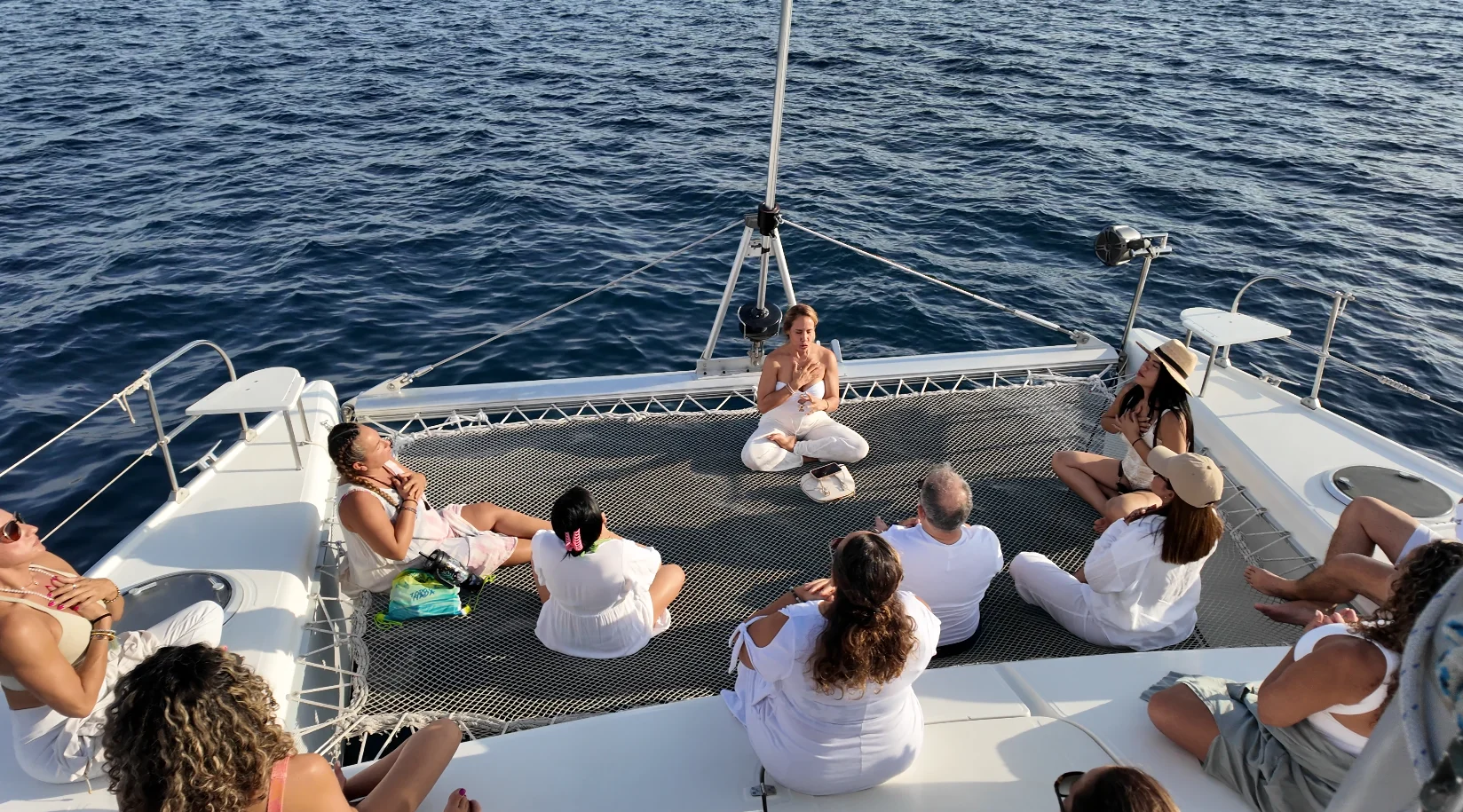
A crowded tour boat means fighting for a spot at the rail. On a private charter the boat is yours: your family, your friends or your group, with no strangers on board and a pace set around the whales and your group.
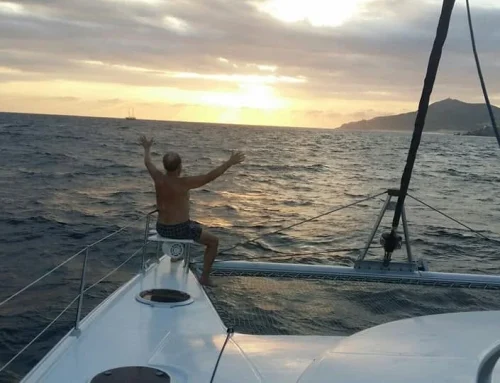
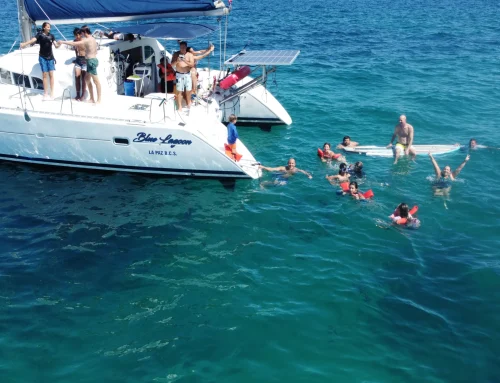
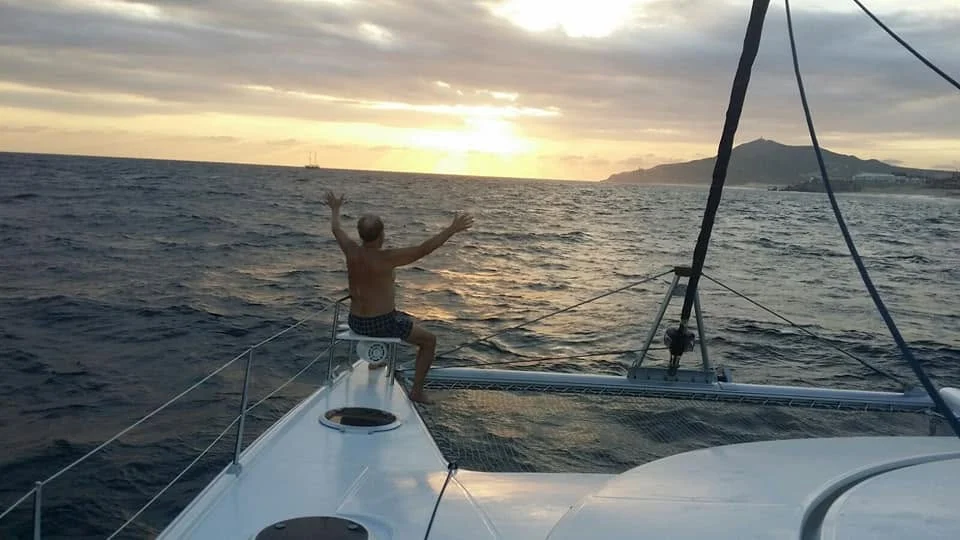
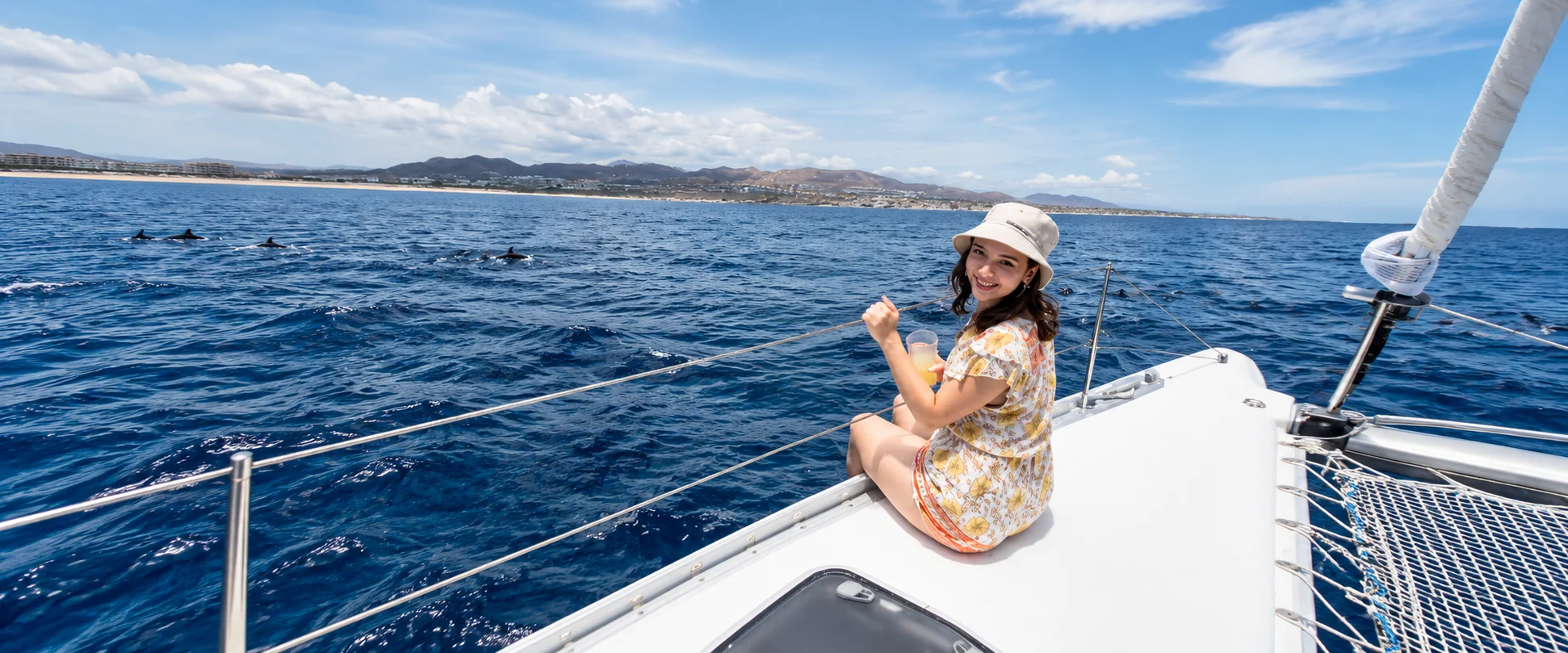
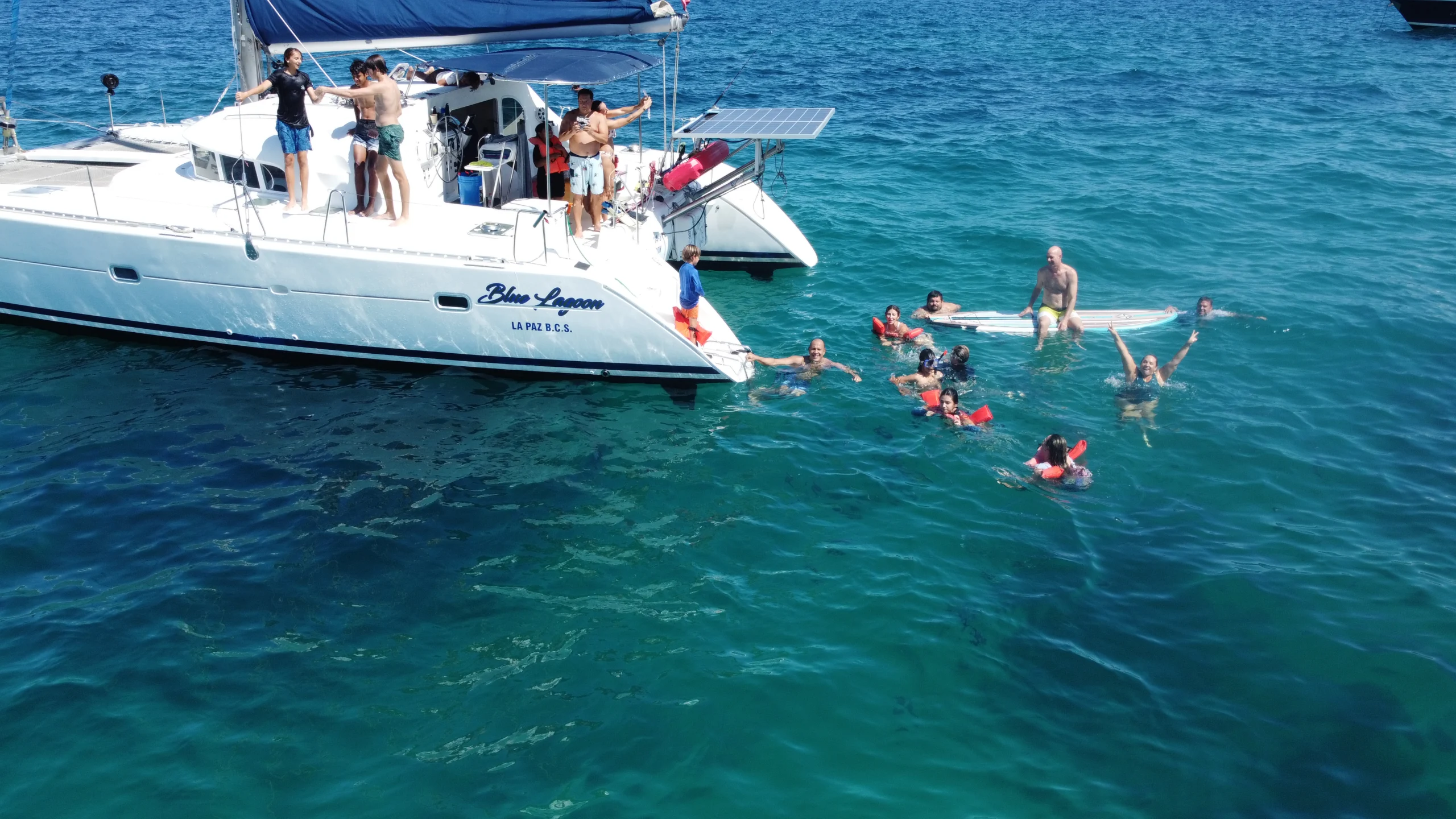
We sail two catamarans, Zig Zag, a Belize 43 by Fountaine Pajot, and Blue Lagoon, a Lagoon 43. Both welcome up to 23 guests. Two hulls make a catamaran much more stable than a single hull boat, which matters when you are standing up with a camera, traveling with kids or with older family members. There is shade, plenty of deck space and a comfortable place to sit when you want to take a break.
Our captain follows the Mexican federal rules for whale watching (NOM 131 SEMARNAT 2010), which set how close boats can get and how long they can stay with a group of whales. We keep a respectful distance and let the whales decide how close the encounter will be. Sometimes a curious humpback comes over on its own, and those are the moments guests remember for years.
Our sailor chef prepares fresh, homemade food on board, with Mexican classics and seafood. Tours depart from Marina Cabo San Lucas, dock F. See all the details of our whale watching tour or plan a longer day with a private catamaran charter.
Tips for Your Whale Watching Day
- Go in the morning if you can. The sea is often calmer early in the day, which makes spotting spouts easier.
- Bring a light jacket. Winter mornings on the water feel cooler than on land.
- Sunscreen, sunglasses and a hat. The Cabo sun is strong even in January.
- A camera with zoom helps, but put it down from time to time and just watch.
- If you get seasick easily, take your usual remedy before boarding. A catamaran is stable, but the open ocean still moves.
- Book early for January to March. Peak whale season overlaps with holidays and private charters fill up fast.
Humpback Whale FAQs
When is humpback whale season in Cabo San Lucas?
The official whale watching season in Los Cabos runs from December 15 to April 15. The best months for humpback whales are late January through March.
Are whale sightings guaranteed in Cabo?
No responsible operator can guarantee wildlife, but during peak season humpback whales are seen on most trips, often just minutes from the marina.
What is the difference between humpback and gray whales?
Humpbacks are dark, have very long pectoral fins and a small dorsal fin, and they breach often. Gray whales are mottled gray with barnacles, have no real dorsal fin and show calmer surface behavior. Around Cabo, gray whales are seen mostly while they migrate between January and March.
How close do boats get to the whales?
Mexican federal rules set a minimum distance and a time limit for every boat. Our captain follows them, and sometimes curious whales choose to come closer on their own.
Can children join a whale watching tour?
Yes. Families are welcome, and a private catamaran is one of the most stable and comfortable ways for kids to watch whales.
How many people fit on a private whale watching catamaran?
Both of our catamarans, Zig Zag and Blue Lagoon, welcome up to 23 guests.